Afraid of the Dark
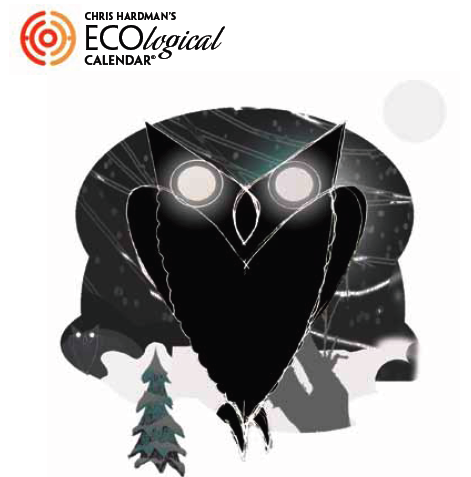
Afraid of the dark?
Usually we go for walks when the sun is up. A morning or an afternoon stroll.
But as the days become warmer, so do the nights.
Sometime after dusk, something—maybe a bright moon, maybe the stars, maybe just plain restlessness– draws you out the door for a walk in the dark.
At night the landscape is completely different than the one you remember from the day.
If you go with a friend, you may not notice the change. You feel safe.
Your conversation insulates you both from little sounds in the darkness.
But if you go alone, and you step away from the lights, or the road,
your senses suddenly become more keen.
This is because your eyes use a different set of nerve cells at night, called rod cells.
Rod cells are color blind so you cannot see as clearly or sharply as you can during the day. But rod cells are thousands of times more sensitive to faint light and motion than cone cells. So even the slightest glimmer or movement will catch your attention.
Studies have also shown that people are more startled by loud noises in darkness than they are in full day. It’s as if sounds are amplified by the absence of light. But your quickened heartbeat might be the loudest sound in your ears.
With your heightened senses, you may feel vulnerable… even afraid?
Was that a coyote howl? A bear growl? A mountain lion prowl?
In every shadow there could be a predator, ready to pounce.
Suddenly, you are a visitor in a foreign land.
Your place in this web of living things is suddenly reversed:
In the day you were a mighty human, you were on top.
The animals scattered as you approached.
In the night, you are a lowly creature.
At the smallest hint of a threat, you feel fragile, frail.
You rush home.
When you open the door to the safety of your house,
the thrill of primitive fear subsides,
and you feel more elated than ever, just to be alive.

 Magic Bus SF